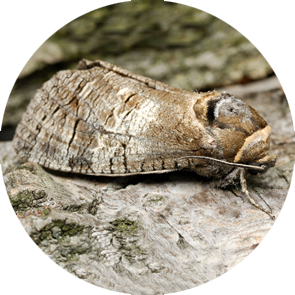
Wingspan of 68 – 96 mm. Forewings grey-brown with indistinct grey-white pattern of numerous wavy lines. Hind wings grey-brown with few markings. Thorax velvety brown-grey with black transversal stripe.
Larvae
Initially pink after eclosing and becoming red brown by the last instar. Dorsum darker and head black. Length of 80-120 mm.
Eggs
Pale brown and oblong, 1.2-1.7mm long. Laid in clusters in bark crevices.
Distribution
Europe, the Middle East and most parts of Asia.
Economic Host(s)
A wide variety of tree species including apple ( Malus ), pear ( Pyrus ), olive ( Oleae ), sweet chestnut ( Castanea ) and oak ( Quercus ).
Symptons/Signs
Larvae bore in all directions within the sap and heartwood of tree trunks and branches interfering with sap circulation and can result in tree death. Frass and an
unusual goat like odour are signs of infestation as is exuding resin from entrance/exit holes.
Generations
<1 (larval development can take up to 5 years)
Monitoring
Adults Present
June to August (climate dependant)
Recommended Trap Density
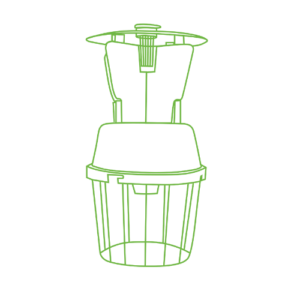
1 – 2 traps per hectare in large uniform plantations or 3 – 4 traps in small low density or mixed plantations.
Trap Maintenance
Check traps on a regular basis; at least twice a week. It is recommended to replace the pheromone dispensers every 4 weeks (or 7 weeks for the 5mg lure) to achieve
optimum results.
Replace sticky inserts, if used, when they become filled with dust or insects.
Storage
Keep product away from heat and direct sunlight. Store in a refrigerator for a shelf life of 18 months or a freezer for an extended life of 24 months. Always store sealed in
original packaging.