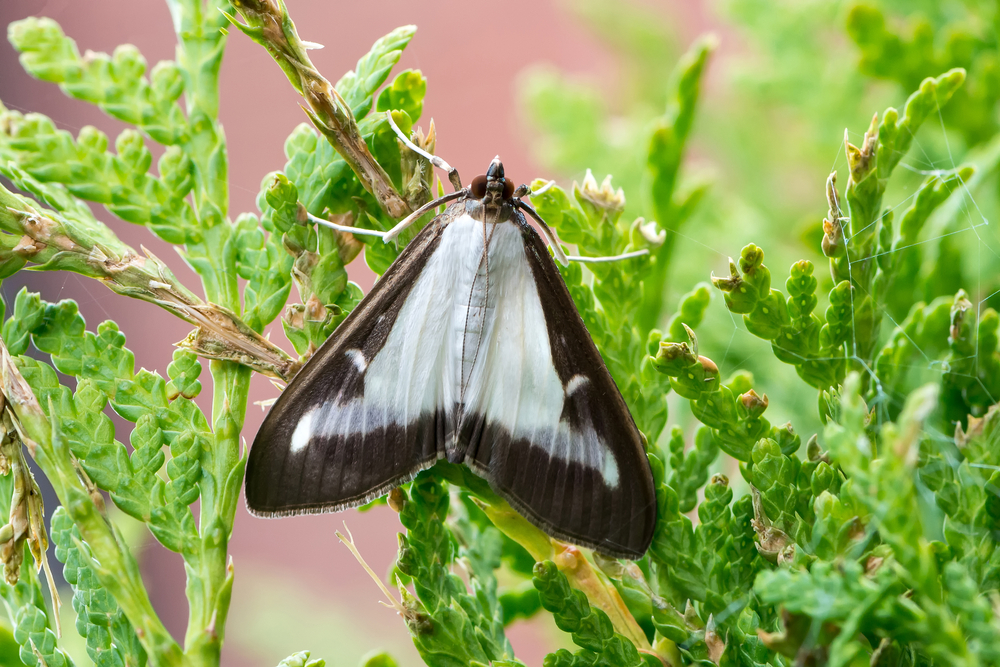
The box tree moth (Cydalima perspectalis) is an invasive pest native to Asia and accidentally introduced into Europe in the early 2000s. It has since spread to North America, Africa, and Australia. The moth is a major threat to boxwood trees, which are popular ornamental plants and plays a role in maintaining biodiversity. It’s home to insects such as butterflies, moths, and beetles, providing food for other wildlife, such as birds and bats.
The berries are a popular food source for birds, such as thrushes, warblers, and finches. The trees also provide nesting sites for birds, such as bluebirds and wrens. Leaves and twigs are a source of food for small mammals, such as rabbits, squirrels, and mice.
The Boxwood is native from southern England to northern Morocco, and the Mediterranean region to Turkey.
The larvae of the box tree moth feed on the leaves of boxwood trees and can completely defoliate a tree, leading to the death of the tree. The moth can have a significant impact on the environment, as boxwood trees are often used in landscaping and wildlife habitats.
In Europe, this moth has been particularly devastating. It is estimated that the moth has caused over €1 billion in damage to boxwood trees. It has also been responsible for the death of many old and rare boxwood trees.
The box tree moth is a serious pest that can have a significant impact on the environment. Hence it is important to monitor for the moth and to take steps to control it.
Trapping: You can use pheromone traps to attract and capture male box tree moths. This will help to reduce the number of moths that can mate and lay eggs.
Hand-picking: If you have a small infestation, you can hand-pick the caterpillars and destroy them. This is a tedious task, but it is effective for small infestations.
Biological control: There are a number of biological control agents that can be used to kill box tree moth caterpillars. These agents include the bacterium Bacillus thuringiensis (Bt) and the nematode Steinernema carpocapsae
If you are interested in adding our monitoring solutions to your product portfolio, please get in touch.