1mg Standard (C11ETA): recommended for normal use in standard monitoring programs
10mg High Loading (C11ETB): For use in orchards utilizing mating disruption.
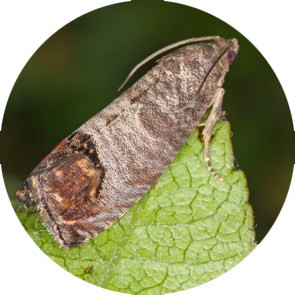
16-22 mm wingspan. Forewings are grey with silvery striations. Ocellus is purplish brown and edged with metallic gold or copper scales. Hindwings greyish-brown. Males has a fold along base of cubital vein which contains
a hair pencil with long black sex scales.
Larvae
Newly eclosed larvae are white with black heads. Mature larvae are 16-20 mm long with a pale pink to reddish colour. Head mottled brown and prothoracic plate & anal shield with distinctive mottled pattern. Anal comb absent. Abdominal legs with 25-35 crochets.
Eggs
Disk shaped and opaque when first laid. Laid singly on fruits, stems and leaves of host.
Distribution
The Americas, Europe, Asia, North Africa, South Africa, New Zealand and Australia.
Economic Host(s)
Pome fruits and walnut.
Symptons/Signs
Larvae often enter pome fruits near the calyx leaving a prominent entry hole with red colouration around the rim. The hole becomes blocked with brown frass as the larvae feeds. Attacked fruit often drop early
Generations
Typically 1-2
Monitoring
Adults Present
October to March (depending on climate)
Recommended Trap Density
2 traps per hectare in large uniform orchards and 3-4 traps per hectare in small, less densely planted or mixed orchards.
Trap Maintenance
Check traps on a regular basis; at least twice a week. It is recommended to replace the pheromone dispensers every 4 weeks (for the Standard lure) and every 4-5 weeks for the 10mg lure to achieve optimum results.
Replace the sticky inserts, if used, when they become filled with dust or insects
Storage
Keep product away from heat and direct sunlight. Store in a refrigerator for a shelf life of 18 months or a freezer for an extended life of 24 months. Always store sealed in original packaging.