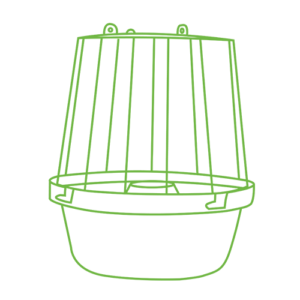
Liquid attractant to be added to traps
(200 – 250 ml)
Dispenser Details
Liquid
Active Life
Typically 3 – 6 weeks (see trap maintenance below)
Pest Details
Adult
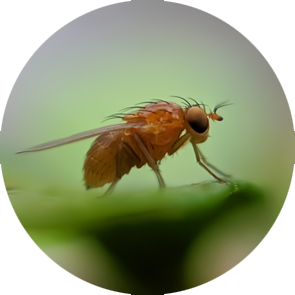
Body length of 2.6-3 mm. Body pale brown to yellowish brown with black bands present on the abdomen. Eyes are red. Males have a prominent dark spot on the fore margin. Females possess a serrated ovipositor with 2 rows of teeth.
Larvae
White and cylindrical with black mouthparts. First instars are ca. 0.07 mm in length and final instars reach up to 6 mm in length.
Eggs
Translucent milky-white and glossy
Distribution
Cosmopolitan
Economic Host(s)
Fruits including plum, cherry (Prunus), currant (Ribes), strawberry (Fragaria), raspberry and blackberry (Rubus).
Symptons/Signs
Larval feeding within the fruit pulp causes damage. Feeding by the developing larvae causes collapse of the surrounding area resulting in a visible depression or blemish on the fruit surface. Rotting of the fruit may follow.
Generations
3-13 (climate dependent).
Monitoring
Adults Present
April to November (temperature dependant)
Recommended Trap Density
Between 10-20 traps per hectare in large uniform fruit crops and greater numbers in mixed and less dense fruit stands or when populations are considerable.
Trap Maintenance
Check traps on a regular basis; at least once a week. The liquid can be topped up every 14 days or when required. Insects can be separated from the liquid using a sieve or fine material to prolong the field life of the liquid.
Storage
Keep product away from direct sunlight, heat, sparks and open flame. Store in ambient conditions for a shelf life of 18 months. Always store sealed in original packaging