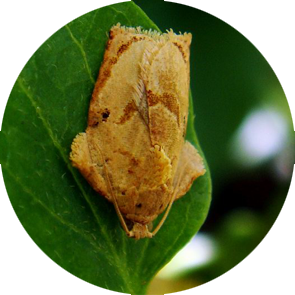
Wingspan of 16-20 mm for males and ca. 23 mm for females. In males forewings are greyish brown with darker brown markings and a dark spot at costa and hindwings are dark fuscous. In females forewings are pale brown without many distinct markings and fuscous hindwings. Wings bell shaped at rest.
Larvae
Up to 25 mm in length. Dark green body and a shiny black head.
Eggs
Flat, deposited in overlapping clusters on the upper surfaces of mature leaves.
Distribution
Asia
Economic Host(s)
Tea and coffee
Symptons/Signs
Early instars tend to feed on growing points at the top of the plant. Later instars roll leaves and web leaves together. Damage is done to leaves, fruits, shoots and flowers.
Generations
2
Monitoring
Adults Present
December to April (June to September in Northern areas). Traps should be installed in November or May in northern regions.
Recommended Trap Density
8-10 traps per hectare for large uniform crop stands and 10-12 traps per hectare in mixed or less dense crop stands
Trap Maintenance
Check traps on a regular basis; at least twice a week. It is recommended to replace the pheromone dispensers every 4 weeks to achieve optimum results.
Replace the sticky inserts when they become filled with dust or insects.
Storage
Keep product away from heat and direct sunlight. Store in a refrigerator for a shelf life of 18 months or a freezer