Wingspan of 18-22 mm. Wings transparent with red scales present on the central bar of the forewing. Four unevenly spaced yellow bands are present on the abdomen and the legs are yellow. The bushy tail of
females is yellow and in males is black above and yellow below.
Larvae
Creamy white body and a brown head.
Eggs
Laid singly on recently cut stumps or wounds on trunks and main branches.
Distribution
Europe
Economic Host(s)
Primarily Oak (Quercus) but also beech (Fagus), chestnut (Castaneae) and blackberry (Rubus)
Symptons/Signs
Larvae bore below the bark to feed within galleries between the bark and cambium. On exiting the pupal chamber, the new adults leave pupal skins in or beside the exit holes.
Generations
1
Monitoring
Adults Present
May-August (climate dependant)
Recommended Trap Density
2 traps per hectare in large uniform stands and 3-4 per hectare in scattered fruit crops and tree stands.
Trap Maintenance
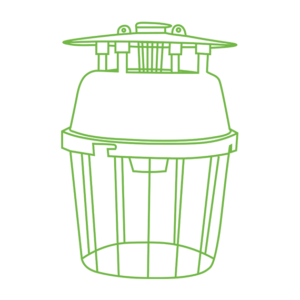
Check traps on a regular basis; at least twice a week.
Replace the pheromone dispensers every 4 weeks to achieve optimum results.
Storage
Keep product away from heat and direct sunlight. Store in a refrigerator for a shelf life of 12 months or a freezer for an extended life of 24 months. Always store sealed in original packaging.